

Ever wanted a security camera without drilling into your house? I did. Dragging out tools, climbing ladders, and patching holes later never sounded fun.
The ANNKE Solar Security Camera caught my eye because it promised:
- Wireless freedom
- Solar charging
- No wires at all… mostly
That sounded perfect for my setup, yet I wondered if it could work somewhere unconventional. What if I strapped it to a tree instead of mounting it on a wall?
Would the view be clear enough? Would the Wi-Fi hold up? Could the solar panel really keep it powered? Would leaves trigger false alarms constantly?
I decided to find out! In this guide, I’ll walk through the unboxing, the unconventional setup, and exactly how my tree became a surprisingly effective security guard, with some notable quirks.
The Tree Camera Experiment
Let me be clear upfront: mounting a security camera in a tree is weird. I get it. But here’s why I tried it anyway.
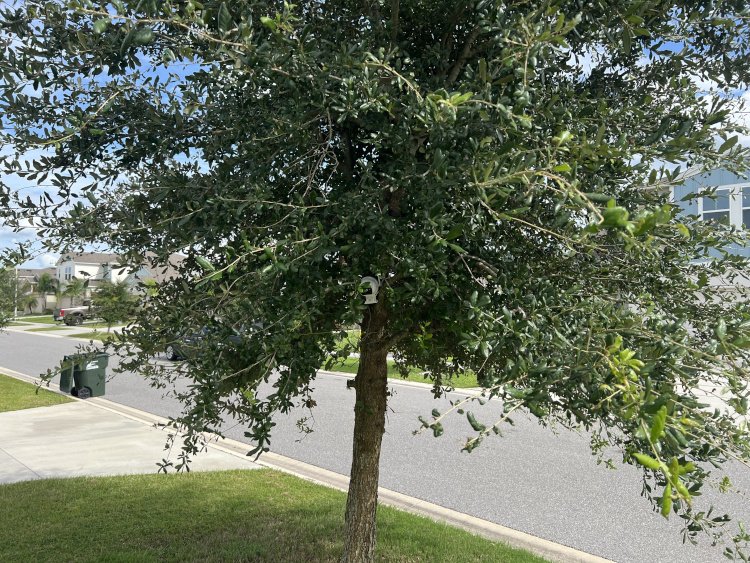
Drilling into the stucco on my house is doable, but a bit more than I want to do before testing out the camera. And honestly? The perfect viewing angle for my property happens to be from a large oak tree about 15 feet from my front door. It gives me a great view of the garage, the front door, and my car.
The tree offers:
- A natural 20-foot elevation
- Clear sightlines to my door, garage, and driveway
- Thick branches that can support weight
- Partial concealment from potential intruders
But it also brings challenges I didn’t fully anticipate.
Unboxing the ANNKE WB300
The camera makes a strong first impression. It’s big and surprisingly heavy! We’re talking nearly 2 pounds. That’s not a bad thing for wall mounting since the build feels solid enough for Florida weather. But for tree mounting? It immediately raised concerns.
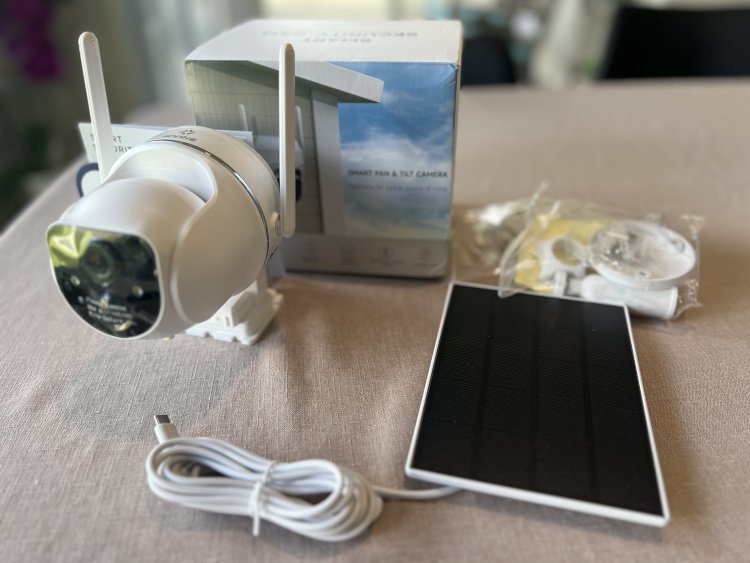
Here’s what stood out:
The Camera Unit: Built like a tank with a weatherproof rating, though heavier than expected for tree mounting. The USB-C charging port and power button sit behind a thick rubber cover.

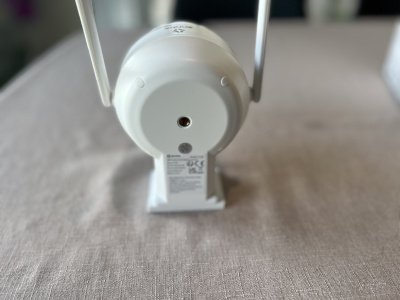
Storage Access: The SD card slot hides at the bottom under a panel that feels hurricane-ready. Unlike my Roku indoor camera that has an exposed slot, this one means business about weather protection.
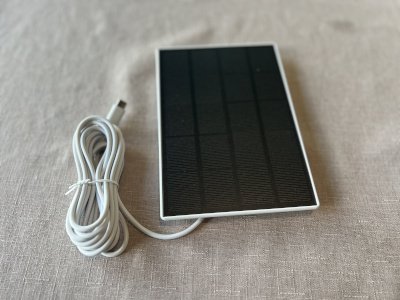
Solar Panel: Much lighter than the camera, with a generous 10-foot cord. Here’s my first concern though, the connector is just a USB-C plug tucked under the camera body. It feels exposed to rain despite the rubber cover.
Mounting Hardware: ANNKE includes a full installation kit with screws, anchors, and a mounting template. Great for walls, useless for trees. I’d need to get creative.
The Manual: Actually helpful, with clear diagrams and realistic charging expectations (15 hours for first charge—they weren’t kidding).
App Setup: The Good and the Pushy

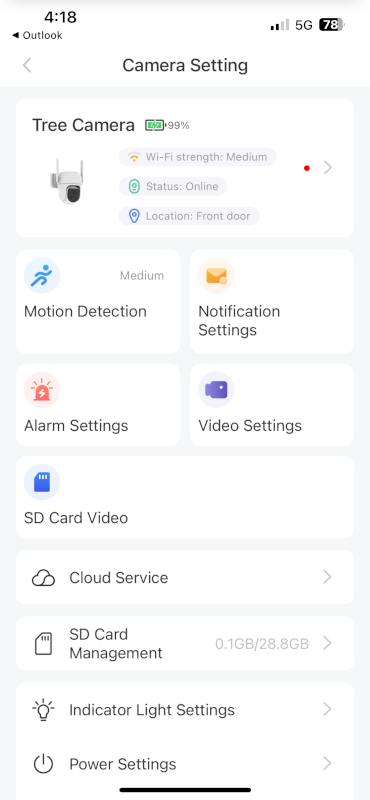
After the 15-hour initial charge, setup was refreshingly simple. The Vicohome app found the camera instantly. No QR codes, no weird pairing modes. Just entered my Wi-Fi password and done. Nice job ANNKE.
The app immediately pushed a firmware update, which is standard. What’s less standard? The app has some aggressive cloud storage marketing. Think YouTube Premium-like nagging. Every third tap seems to trigger a “Upgrade to Cloud!” popup. Hopefully less lessons over time.
Here’s the thing though, you don’t need their cloud service. I dropped in a 32GB microSD card, and the camera started recording automatically. It loops when full, organizing clips by date and time. For comparison, my Roku camera also supports SD cards, but you have to remove them to view footage. The ANNKE lets you browse recordings directly in the app, which is huge for convenience.
The live feed loads fast with minimal lag. Video quality at 2K (3MP) is noticeably sharper than my 1080p Roku, though whether you need that extra resolution is debatable. And if your shopping for a similar model on Amazon, you’ll get even better resolution than I am.
The Tree Installation Challenge
Here’s where things got interesting.
Finding the Right Harness
Traditional camera mounts don’t work on trees. After searching around for different straps, I settled on a ratcheting tree harness (on Amazon) typically used for hunting cameras. It cost an extra $15 per mount (one for the camera and one for the solar panel). They connect easily to the ANNKE hardware though!
The Weight Problem
Remember that 2-pound camera? On a tree branch with any wind, it becomes a pendulum. My first installation swayed so much the footage looked like found footage from a horror movie.
The solution? Mount it against the trunk, not on a branch. But that limited my angle options significantly.
The Upside-Down Discovery
The camera kept pointing too far down because of how the bracket sat against the curved trunk. In desperation, I flipped it upside down. Surprisingly, the base mount actually held the angle better this way. The Vicohome app has an image flip option, so the feed still displays correctly.

Height and Accessibility
I mounted it about 8 feet up, high enough to avoid tampering but low enough to reach with a stepladder for SD card access or cleaning. Any higher and maintenance becomes a production.
The Solar Panel Puzzle
Placing the solar panel required strategy. Trees create shade (obviously), so I had to mount the panel on a separate branch that gets morning sun. The 10-foot cable gave me plenty of reach to move the panel around to find the best spot with sun, without it being too obvious.
Performance Reality Check
After two months in the tree, here’s what actually works and what doesn’t.
Video Quality: A
The 2K resolution delivers clear footage during the day. I can read license plates in my driveway and identify faces at my door. Leaves occasionally drift into frame, creating artistic but unhelpful bokeh effects. I can’t blame the camera for the leaves though.
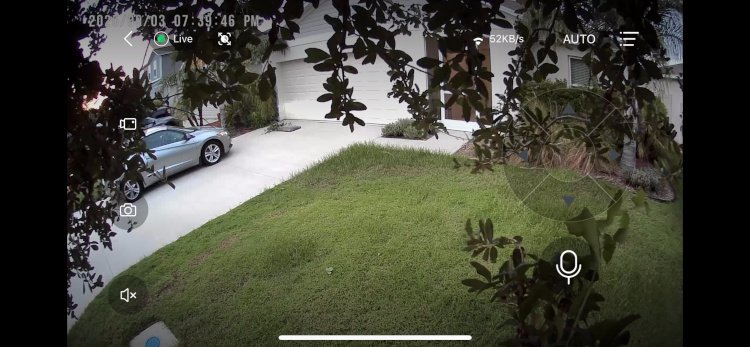
The infrared reaches about 30 feet effectively. Moving leaves create ghostly shadows that look creepy but aren’t particularly useful for security.
Motion Detection: (Tree-Specific Issues)
Here’s the big problem with tree mounting: false alarms. Lots of them.
The ANNKE has better motion detection options than my Roku camera, with customizable zones and sensitivity settings. But when your camera lives in a tree, every breeze becomes a potential intruder. On windy days, I get 50+ false alerts.
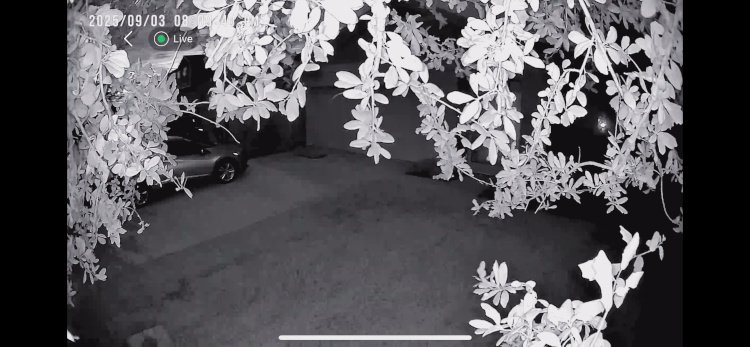
I’ve dialed sensitivity down to minimum and created detection zones that exclude the leafiest areas. It helps, but doesn’t eliminate the problem. For comparison, the same camera mounted on a wall would be great for motion detection.
Battery Life and Solar: A
The 9000mAh battery alone lasts about 5-7 days with moderate activity (10-15 events daily). With the solar panel getting 4-5 hours of direct sun, I haven’t had to charge it manually once.
However, during a week of cloudy weather, the battery dropped to 20%. The tree’s shade definitely reduces solar efficiency compared to roof mounting. But my bet is even that drop should be fine combined with the Florida sun.
Wi-Fi Stability: A
At 20 feet from my router through one exterior wall and some foliage, the connection mostly holds. I get occasional dropouts during storms, and sometimes the feed takes 5-10 seconds to load. Not deal-breaking, but noticeable. And remember. It supports 2.4 networks only. Not 5.0.
Despite my concerns, the tree-mounted unit delivered solid Wi-Fi connectivity and an unobstructed field of view—arguably better than what I’d have from a wall under my roofline. Not bad for a tree mounted camera with no wires.
Features That Actually Matter
Pan and Tilt Control
The 355° horizontal and 90° vertical movement partially saves the tree mounting. When leaves block one area, I can remotely adjust the view. Without this feature, tree mounting would be impossible.
Two-Way Audio
Works well enough to yell at delivery drivers or neighborhood cats. Audio quality is tinny but clear. The speaker is loud enough to be heard from the street.
Storage Options
Local SD card recording is fantastic, no subscriptions required. The app lets you scrub through recordings efficiently, unlike some cameras that make local storage intentionally painful to push cloud subscriptions.
Smart Detection
Person detection works reasonably well, though it sometimes confuses my swaying garden gnome for a human. Vehicle detection is accurate when cars are actually in frame.
The Tree Mounting Verdict
Who This Works For:
- Renters who can’t drill
- Properties where trees offer better viewing angles
- People wanting to hide their cameras
- Anyone prioritizing unique placement over perfect performance
Who Should Mount Normally:
- Anyone in very windy areas
- Properties with dense tree canopies
- People who hate false alarms
- Those wanting minimal maintenance
Frequently Asked Questions
Yes, with caveats. You need 4-5 hours of direct sun daily. Tree shade reduces efficiency significantly. In my partially shaded setup, it works but just barely during cloudy weeks.
Local SD card storage means your footage stays on your property. The app uses encryption for remote viewing. No mandatory cloud storage means better privacy than many alternatives.
Honestly? Mediocre. Moving leaves create distracting shadows, and the IR light reflects off nearby branches. Still functional, but not ideal.
For my specific situation (renting, perfect tree position), yes. For most people with other mounting options, probably not. The false alarm issue alone would drive many users crazy.
Conclusion
If you’re after a no-drill, elevated vantage point, the WB300 can actually perform surprisingly well in a tree—as long as you’re willing to give the mount a little extra support. It’s a surprisingly practical solution if you’re looking for height and flexibility without breaking out the toolbox.
The good: Excellent build quality, truly wireless operation, sharp video, and local storage that actually works. The pan/tilt feature saves tree mounting from being completely impractical.
The frustrating: Constant false alarms from leaves, reduced solar efficiency from shade, and that vulnerable USB solar connection. Tree mounting amplifies every minor weakness.
For ~$60 (on ANNKE), you’re getting a camera that would work brilliantly on a wall or post. In a tree? It works, but with compromises. The false alarm fatigue is real. I’ve started ignoring notifications, which defeats the security purpose.
My recommendation? If you’re considering tree mounting (like me), the ANNKE WB300 can make it work. The solar power and pan/tilt features are essential for this use case. But if you have any other mounting option, wall, post, or even a tall garden stake, take it.
Sometimes the best security solution isn’t the most creative one. But hey, at least my tree has a job now.