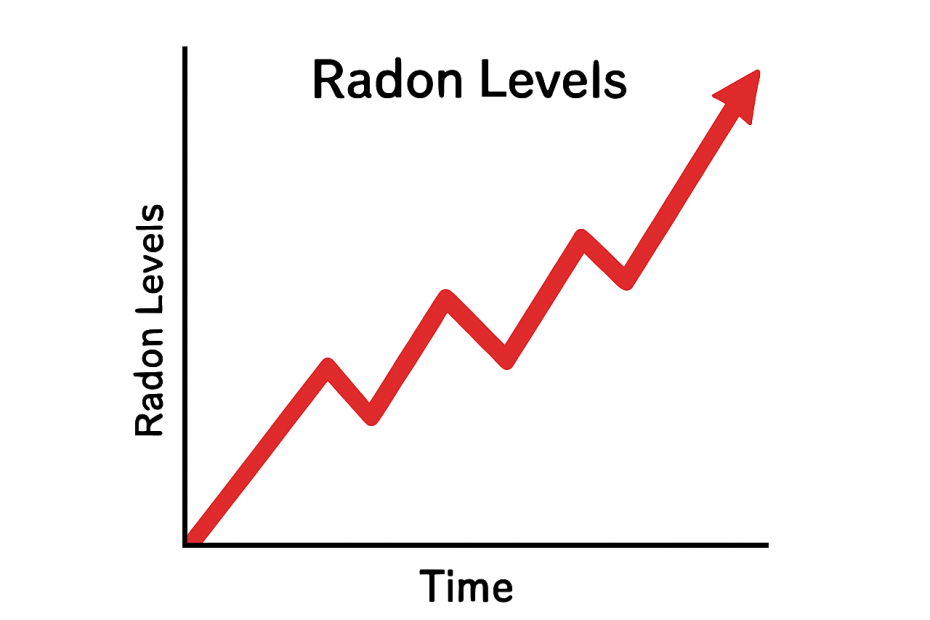

I’m sitting at my desk, coffee in hand, casually checking my new Corentium Home 2 radon detector. After reading about radon and why it’s dangerous, I figured I should test my own house.
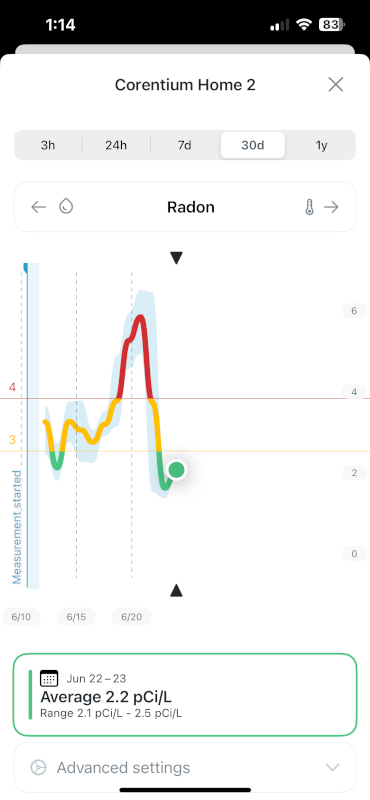
The first couple days looked promising. My Corentium Home 2 was showing nice, safe numbers around 2.8 pCi/L on day one. I actually felt a little smug about my house’s air quality.
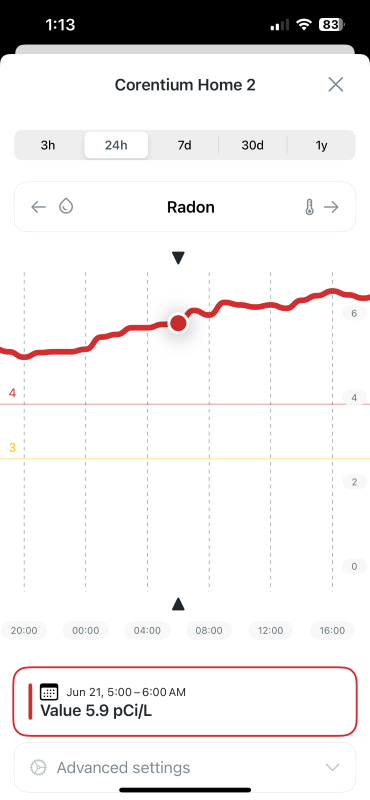
Then the climb began.
- Day 4: 3.9 pCi/L. Getting close to the EPA’s 4.0 action level.
- Day 8: 4.9 pCi/L. Now I’m officially in “do something” territory.
- Day 10: 6.6 pCi/L. Full panic mode.
I tried everything I could think of. Opened windows for fresh air circulation. Added a circulation fan to move air around. Even went on vacation for a week thinking maybe I was somehow causing it. Checked for moisture—bone dry (well… as dry as Florida gets). Moved the detector slightly but kept it in the same general area.
Nothing worked. The numbers kept climbing.
I was convinced my house had a serious radon problem. Time to start researching radon mitigation systems, right? Maybe call some contractors for quotes?
Not so fast.
Where I Placed the Detector: The Real Problem
Here’s what my “strategic” placement actually looked like. I tucked the detector beside my bed, about 2 feet off the ground. It was surrounded by my nightstand, dresser, and the wall. I put it right next to my air quality sensor because that seemed logical. Perfect corner spot with zero air movement.
The location looked clean and convenient. It was also a radon measurement disaster.
Radon gas is heavier than air. It sinks to floor level and pools in dead zones like invisible fog. My detector was sitting in a radon trap, measuring the worst possible pocket instead of room-average levels.
Turns out where you are measuring for radon makes all the difference.
No wonder my numbers looked scary.
The Simple Fix That Changed Everything
After a week and a half of panic, I decided to try something different. Maybe location actually mattered.
For my new placement, I moved the detector to dead center of the room, away from all walls. Put it 3 feet high on a clear table with good airflow from the HVAC and circulation fan. No furniture within 2 feet.
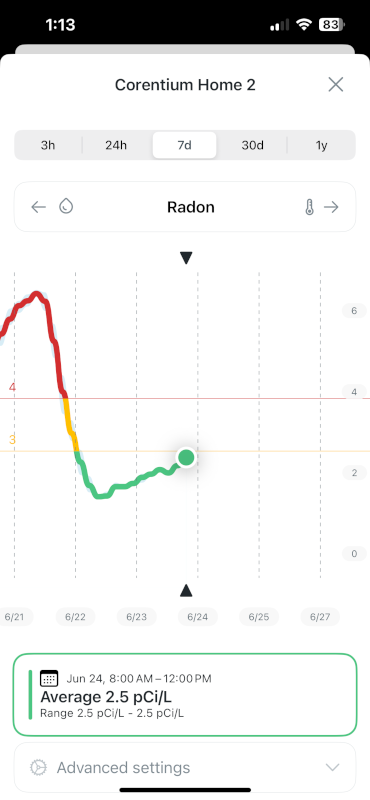
Results after moving on day 11:
- Old spot: 6.6 pCi/L (day 10)
- New spot: 1.6 pCi/L (day 11), 2.2 pCi/L (day 12), 2.5 pCi/L (day 13)
Same room. Same house. Same ventilation. The readings were night and day different.
I actually thought my detector was broken. Nope—just badly placed.
Why Location Matters More Than You Think
Radon behaves predictably. It sinks to floor level first because it’s heavier than air. Gets trapped by furniture and walls. Builds up in low-circulation areas and creates concentrated hot spots.
My detector measured furniture problems, not house problems.
Even with windows open and fans running, the corner spot stayed stagnant. Air moved around the room but never reached my little radon pocket.
Next Experiment: Testing Bad Placement With Airflow
My inner scientist couldn’t let this go. I’m currently running a follow-up test by moving the detector back to the original bad spot and adding a small fan pointed directly at the area. I’m testing if targeted airflow fixes poor placement and will update with results in two weeks.
Hypothesis: Even terrible spots work with proper air movement.
How to Avoid My Placement Mistake
For smart detector placement, keep it 3+ feet from walls and avoid corners completely. Chest height works best when possible, around 3-6 feet up. Place it where there’s good airflow near HVAC vents, but not blocking them. Keep clear space with no furniture within 2 feet. Avoid bathrooms, kitchens, exterior walls, and closets. Airthings has detailed placement guidelines that are worth checking out.
Timeline expectations: Days 1-3 see numbers jumping around wildly. Days 4-7 show readings starting to stabilize. Week 2 and beyond is when you can trust averages over daily spikes.
Don’t panic over early readings. The Corentium needs time to establish baselines.
Frequently Asked Questions
Sensor placement causes most falsely high readings. Check if your detector sits near walls, behind furniture, or in stagnant air pockets. Move it to an open area with decent airflow and watch what happens. My 6.6 reading dropped to 1.6 just by changing locations in the same room.
Absolutely—furniture creates mini radon traps. Nightstands, dressers, couches, and bookshelves block air movement. Radon settles behind them like dust, giving your detector a concentrated dose instead of room-average levels. I learned this the hard way when my bedside placement gave me weeks of unnecessary panic.
Give it at least a week, preferably two. My numbers jumped around for the first few days, then started stabilizing. Don’t make any major decisions based on day-one readings. The detector needs time to establish accurate baselines for your specific space.
Give it at least a week, preferably two. My numbers jumped around for the first few days, then started stabilizing. Don’t make any major decisions based on day-one readings. The detector needs time to establish accurate baselines for your specific space.
Don’t Panic: Your High Reading Might Be Wrong
Sensor placement causes most false alarms. High readings often reflect detector location, not actual danger. Simple moves can change everything.
Before calling radon professionals, try moving your detector. Your “radon emergency” might just be a furniture geometry problem.
My week-and-a-half of panic taught me that buying a good detector is only half the battle. You have to use it correctly. Understanding why radon is dangerous motivated me to test, but proper placement made all the difference.
The Corentium Home 2 is excellent—I just gave it an impossible job by sticking it in a stagnant corner.