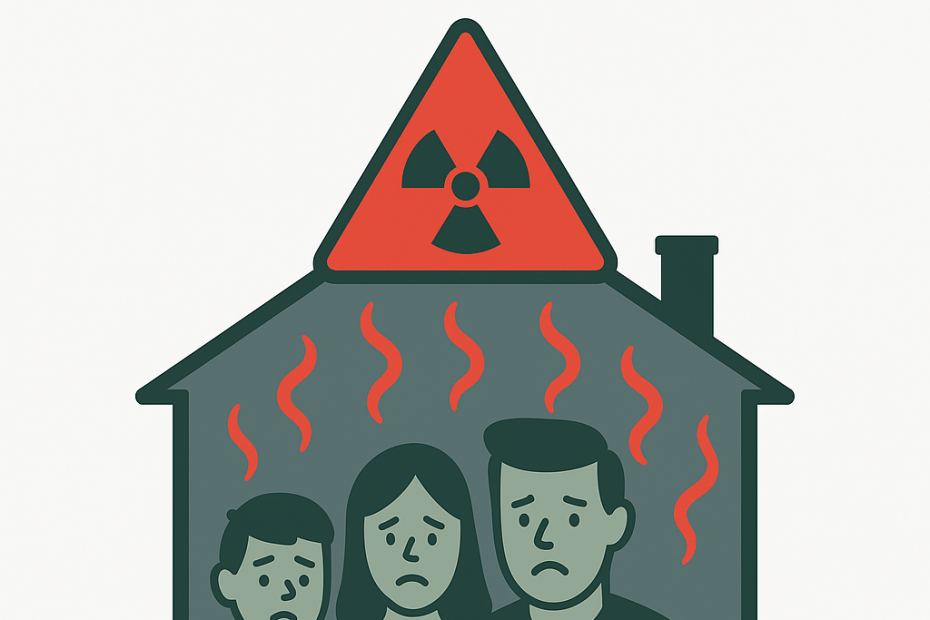

Have you heard of radon? If you’re curious whether it’s something you should be concerned about, let’s learn together.
Here’s a sobering fact: Every 25 minutes, someone in the United States dies from radon-related lung cancer. That’s more than 21,000 deaths each year from a gas you can’t see, smell, or taste.
Radon is a radioactive gas that seeps up from the ground into houses across America. About 1 in 15 U.S. homes has radon levels at or above the EPA’s action level (cancer.gov). New homes, old homes—it doesn’t matter.

But here’s the good news: Testing for radon is simple and affordable. You don’t need special training or expensive equipment to find out if your home has a problem.
I’ll walk you through everything you need to know about radon detection. You’ll learn what radon actually is, why it matters, and most importantly—how to test your home today. By the end, you’ll know exactly what steps to take.
Let’s start with the basics.
What Is Radon, Really?
Radon is a naturally occurring radioactive gas that’s invisible and has no odor or taste. Think of it as nature’s invisible troublemaker.
It comes from the normal decay of uranium, which is found in nearly all rocks and soils. Every piece of ground on Earth contains tiny amounts of uranium. As uranium breaks down over time, it creates radon gas.

Here’s where it gets tricky for homeowners. Radon can move up from the ground into buildings through openings in floors or walls that contact the ground. Your basement floor, foundation cracks, even gaps around pipes become pathways for radon to sneak inside.
Once radon gets into your home, it can accumulate to dangerous levels. Unlike outdoor air where radon disperses quickly, indoor air traps the gas. Your house essentially becomes a container that concentrates radon over time.
The amount of radon varies wildly by location. Some areas have naturally higher uranium levels in the soil and rock. But here’s what surprises most people: radon concentration fluctuates based on local geology, soil permeability, climate, and terrain. Even neighboring houses can have completely different radon levels. Check out this map to see if your area is known to be bad.
Why Radon Is a Bigger Deal Than You Think
Radon is the second leading cause of lung cancer in the United States. Only smoking kills more people from lung cancer each year.
Here’s what makes radon particularly dangerous: it’s a cumulative risk. The longer you’re exposed to elevated radon levels, the higher your chances of developing lung cancer. Think of it like getting a suntan—except instead of UV rays, you’re breathing radioactive particles that lodge in your lungs.
Non-smokers aren’t safe either. About 2,900 of those 21,000 annual radon deaths happen to people who never smoked. If you’re a smoker exposed to radon, your risk multiplies dramatically.
⚠️ The sneaky part? Radon exposure has no immediate symptoms. You won’t cough, wheeze, or feel sick from breathing radon today. Lung cancer typically develops 5-25 years after exposure begins. By then, it’s often too late for early intervention.
Most homeowners obsess over carbon monoxide detectors and smoke alarms. Both are important, but here’s some perspective: radon kills about 10 times more people than carbon monoxide poisoning each year. Yet most people have never tested their homes for radon.
The EPA estimates that fixing radon problems in homes could save thousands of lives annually. Unlike many health risks, this one has a clear solution—and it starts with knowing whether you have a problem.
How to Tell If Radon’s in Your Home
Here’s the short answer: You can’t tell without testing.
Radon is completely invisible, odorless, and tasteless. There’s no magical way to sense its presence. You won’t feel dizzy, get headaches, or notice anything different about your air quality. Your home could have dangerously high radon levels right now, and you’d have no clue.
Some people think they can spot radon problems by looking for certain house characteristics. While some factors do increase your risk, they’re not reliable indicators. I’ve seen brand-new, perfectly sealed homes with sky-high radon levels. I’ve also seen old houses with foundation cracks that test perfectly safe.
That said, certain things do make radon problems more likely:
• Basement or ground-level living spaces – The closer you are to the ground, the higher your exposure • Well water – Can add to indoor radon levels (though it’s usually a smaller contributor) • Certain geographic regions – Some areas have naturally higher soil uranium levels • Foundation cracks or gaps – Create more pathways for radon to enter • Tightly sealed homes – Can trap radon inside more effectively
Speaking of geographic regions, some states consistently see higher radon levels than others. Alaska tops the list with average levels of 10.7 pCi/L, followed by South Dakota (9.6 pCi/L) and Pennsylvania (8.6 pCi/L). Ohio, Washington, Montana, and Kentucky also rank high. But remember—these are averages. Individual homes can vary dramatically even within the same neighborhood. Learn about pCi/L.
Here’s what might surprise you: newer homes can actually have higher radon levels than older ones. Modern construction creates tighter building envelopes that trap radon more effectively. Plus, energy-efficient homes often have less natural air exchange.
The bottom line? Any home can have a radon problem. The only way to know for sure is to test. Rich neighborhoods, poor neighborhoods, new construction, historic homes—radon doesn’t discriminate.
The Easiest Ways to Test for Radon
Testing for radon is surprisingly simple and affordable. You have two main options: DIY test kits or professional testing. Most people start with DIY kits since they’re cheap and accurate.
Short-Term Tests (2-90 days)
These are your quick screening tools. Short-term testing can take 2–90 days, with most kits running 2-7 days. They’re perfect for getting a fast snapshot of your radon levels. Here’s a test kit on Amazon.
Popular short-term options include: • Charcoal canisters – Available at home improvement stores for about $10 to $50 • Alpha track detectors – More accurate for longer periods • Electret ion chambers – Usually available through labs only
Long-Term Tests (90+ days)
Long-term tests measure radon levels for a minimum of 90 days and are the best way to estimate the annual average radon in your home. They give you a more accurate picture since radon levels fluctuate with seasons, weather, and your home’s ventilation patterns.
Digital Radon Detectors
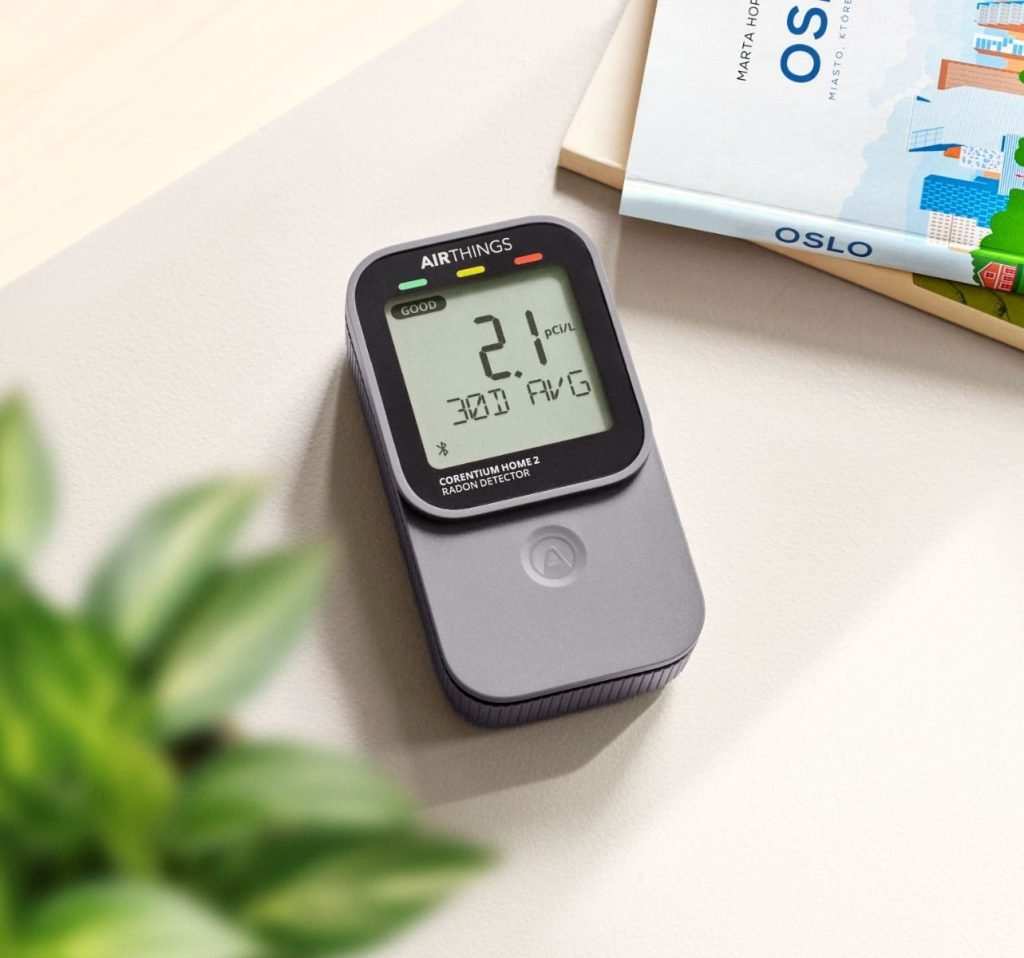
These are the smart home solution. Digital detectors provide continuous monitoring and real-time readings. They cost more upfront ($100-$200) but eliminate the wait time for lab results. Like the Corentium Home 2 (check out my review).
Professional Testing
Professional testing makes sense for real estate transactions or if you need certified results. Expect to pay $150-$300, but you’ll get precise measurements and expert interpretation. Learn more from the EPA.
🎯 Which Option Should You Choose?
Start with a short-term DIY test to get quick results. If levels are elevated (4 pCi/L or higher), follow up with a long-term test or professional measurement. For ongoing monitoring, digital detectors are worth the investment.
Most test kits are incredibly simple to use. You basically open the package, place it in your basement or lowest lived-in level, wait the specified time, then mail it to a lab. Results typically come back within a week.
Frequently Asked Questions
Radon is a naturally occurring radioactive gas that’s the second leading cause of lung cancer in the United States. It seeps into homes from soil and rock through foundation cracks and gaps.
You can’t know without testing—there’s no way to see, smell, or feel radon in your home. The only reliable method is using a radon test kit or digital detector.
The EPA recommends taking action if radon levels reach 4 pCi/L or higher. There’s no completely “safe” level, but the EPA suggests considering mitigation for levels between 2-4 pCi/L.
Test your home every two years, or after major renovations. Radon levels can change over time due to foundation settling and seasonal variations.
Yes, DIY radon testing is accurate and affordable. Test kits cost $10-$50 at home improvement stores (Amazon example), while digital detectors run $100-$200 (Amazon example).
Radon exposure produces no immediate symptoms. Lung cancer typically develops 5-25 years after exposure begins, making testing crucial for prevention.
Don’t Guess—Test Your Home for Radon
Here’s the bottom line: radon is a serious health risk, but it’s also completely manageable once you know what you’re dealing with.
Testing is the only way to find out if radon is a problem in your home. The good news? It’s easier and cheaper than you probably think. A simple $10-$50 test kit from your local home improvement store can give you peace of mind in just a few days.
Don’t let the invisible nature of radon keep you guessing about your family’s safety. Thousands of people die from radon-related lung cancer each year simply because they never knew they had elevated levels in their homes.
Your next step is simple: pick up a radon test kit this weekend. Place it in your basement or lowest lived-in level, follow the instructions, and mail it off. Within a week, you’ll know exactly where you stand.
If your levels come back high, don’t panic. Radon problems are fixable. Professional mitigation systems are effective and often cost less than a major home appliance.
Ready to get started? Check out our detailed review of the Corentium Home 2 to find the solid digital detector for ongoing monitoring. Or learn more about radon levels in your specific area to understand your local risk factors.